Thermal airflow modeling for critical facilities.
Data halls, electrical rooms and telecom shelters inside; buildings, rooftop plant and wind outside. Built in CoolSim on your PC and solved with Ansys Fluent on our cluster. Every job is monitored, and if one fails, an engineer fixes it and runs it again.













Step outside the hall.
Wind and rooftop plant decide how well a campus rejects heat. Put chillers, condensing units and generators on the roof or in the equipment yard, set the wind direction and the design-day temperature, and see where the warm discharge goes before anything is installed.
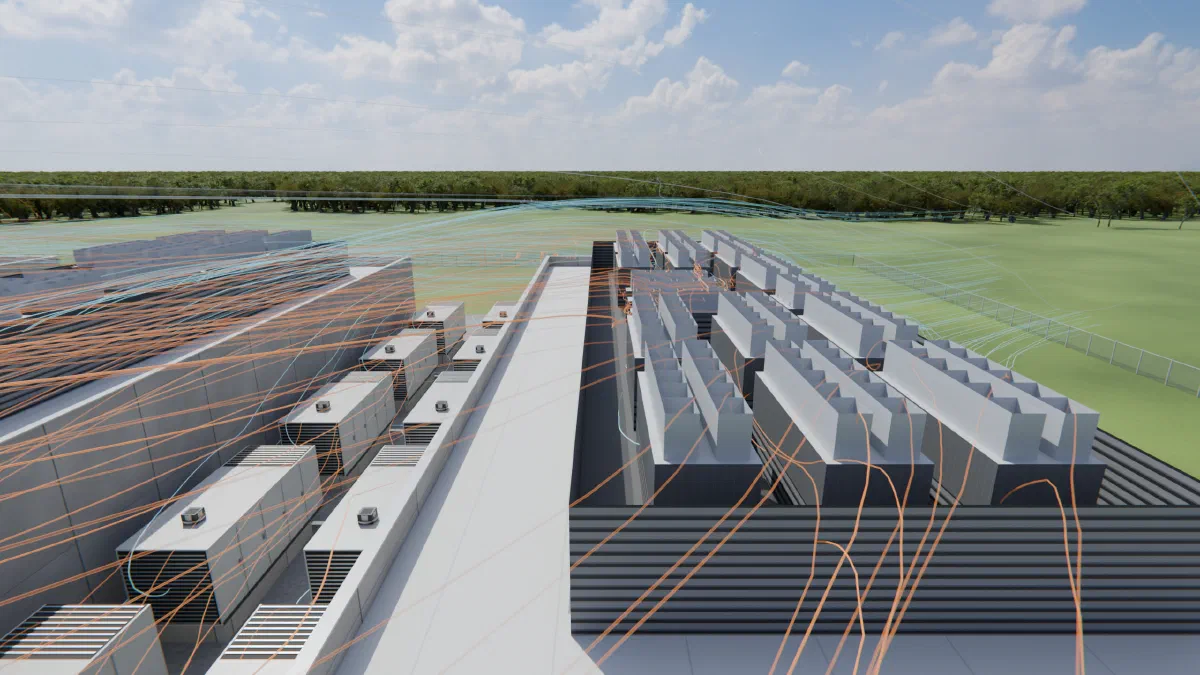
- Wind
- 35 mph
- from the north-west
- Design day
- 110 °F
- ambient air
- Mesh
- 9.5 M
- cells, Ansys Icepak
- Solver
- Fluent
- Ansys, in our cloud
You build the model. We run the CFD.
Meshing, solving and reporting happen on our cluster, watched by engineers who model data centers every day.


Model the room in the terms you already use.
Drag racks, CRACs, floor tiles, ducts and diffusers into a 3D model of the hall on your PC. Libraries of common equipment are built in, and anything you make can be saved for the next project.
- Raised and non-raised floors
- Containment
- Racks to the 1U
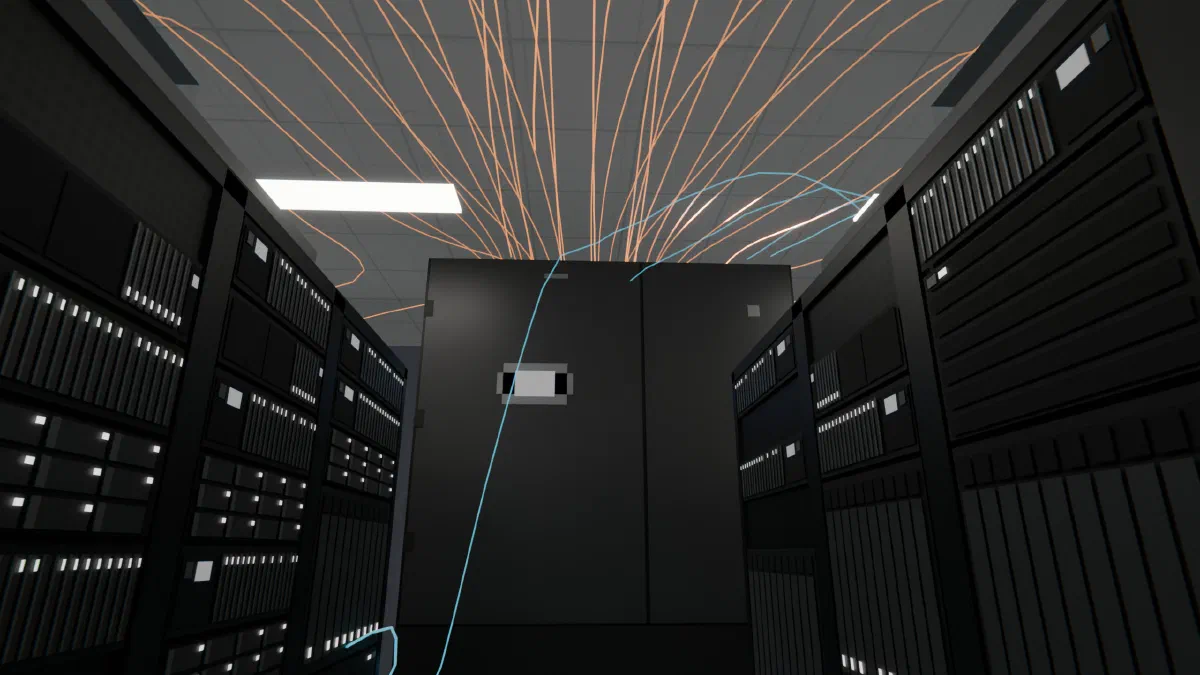
Ansys solvers, without the Ansys license.
Submit the model and it is meshed with Ansys Icepak and solved with Ansys Fluent on our cloud cluster: no annual license, no workstation to buy. Every job is monitored, and if one fails, a support engineer finds the cause, fixes it and resubmits.
- Icepak mesh
- Fluent solve
- Up to 4 CRAC scenarios per job
A report your client can read.
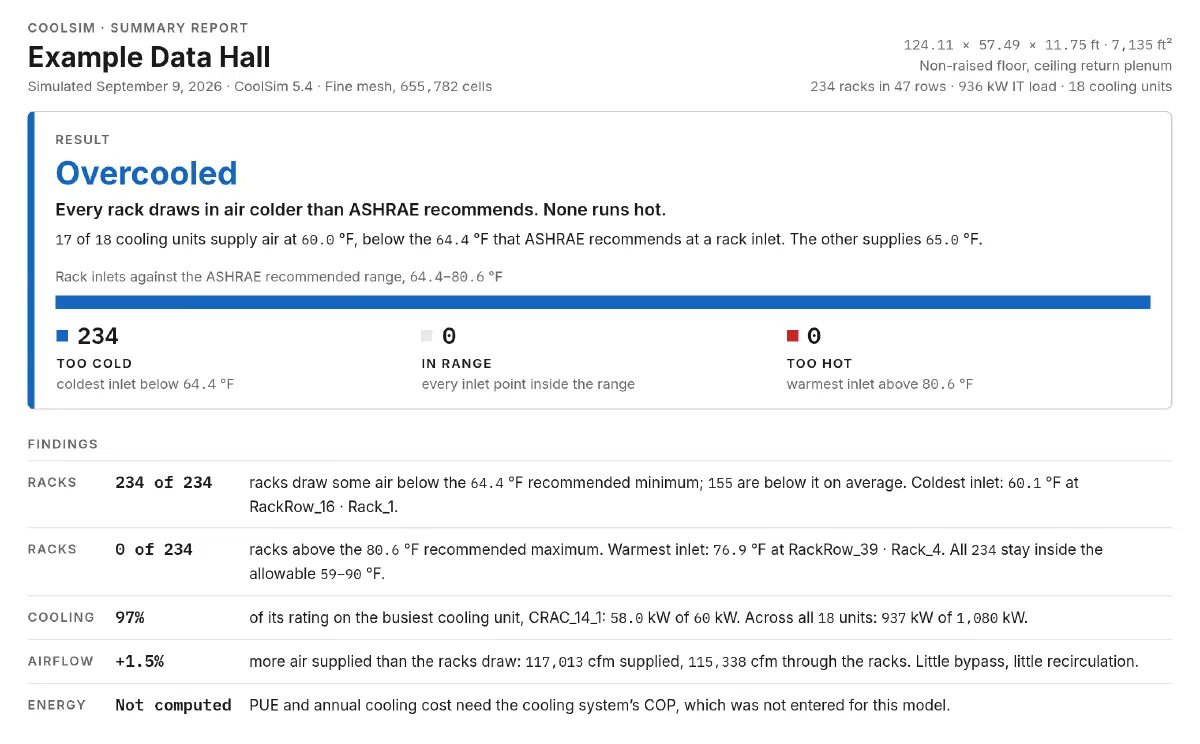
Every job returns a Data Center Output Report automatically: airflow and temperature for every piece of equipment in the room, measured against the ASHRAE ranges, with graphics and animations. The report is a web page, so sharing it means sending a link.
- Every rack on one map
- Shareable link
For the teams who run halls, and the teams who design them.
For Colocation / Data Center Operators
Check that cooling keeps up as IT load grows, find your most critical cooling units, and plan for a unit failure before it happens.
Read more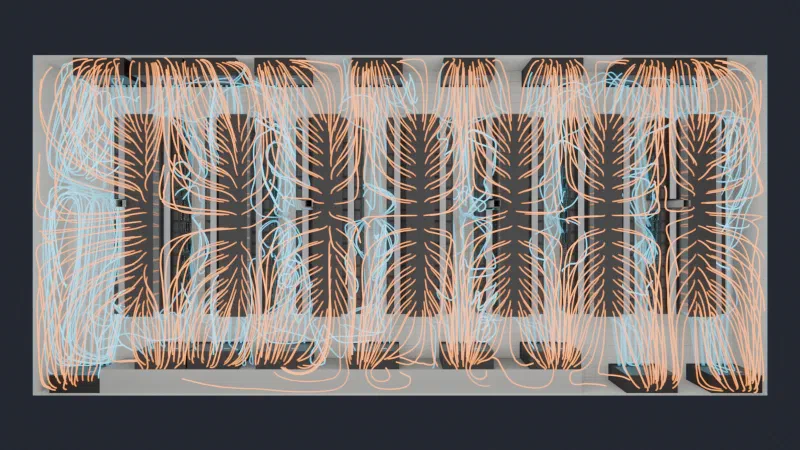
For Design / Build Engineers
Compare containment, floor and cooling options before anything is built, and give your client a report that shows why one design wins.
Read moreWhen the problem is bigger than the hall.
Our CFD engineers build and run the models for you, from a single campus study to a scenario nobody has a template for.
Discuss your modeling challenge- External flow
Campus-scale wind studies
Wind across a whole campus: building layout, and where generators and chillers go.
- Transient
Cooling failure over time
Rack temperatures through a cooling interruption: where hot spots form and how long recovery takes.
- Dispersion
Exhaust and NOx dispersion
Generator, boiler and truck exhaust at your air intakes, against EPA limits: where to put the intake, and how tall the stack.
- Custom
Beyond the data center
Clean rooms, operating rooms, paint booths, pharmaceutical storage. Tell us the scenario.
Model your next hall before you build it.
Start with a 30-day trial. Our Quick-Start program pairs your first project with a CoolSim expert.
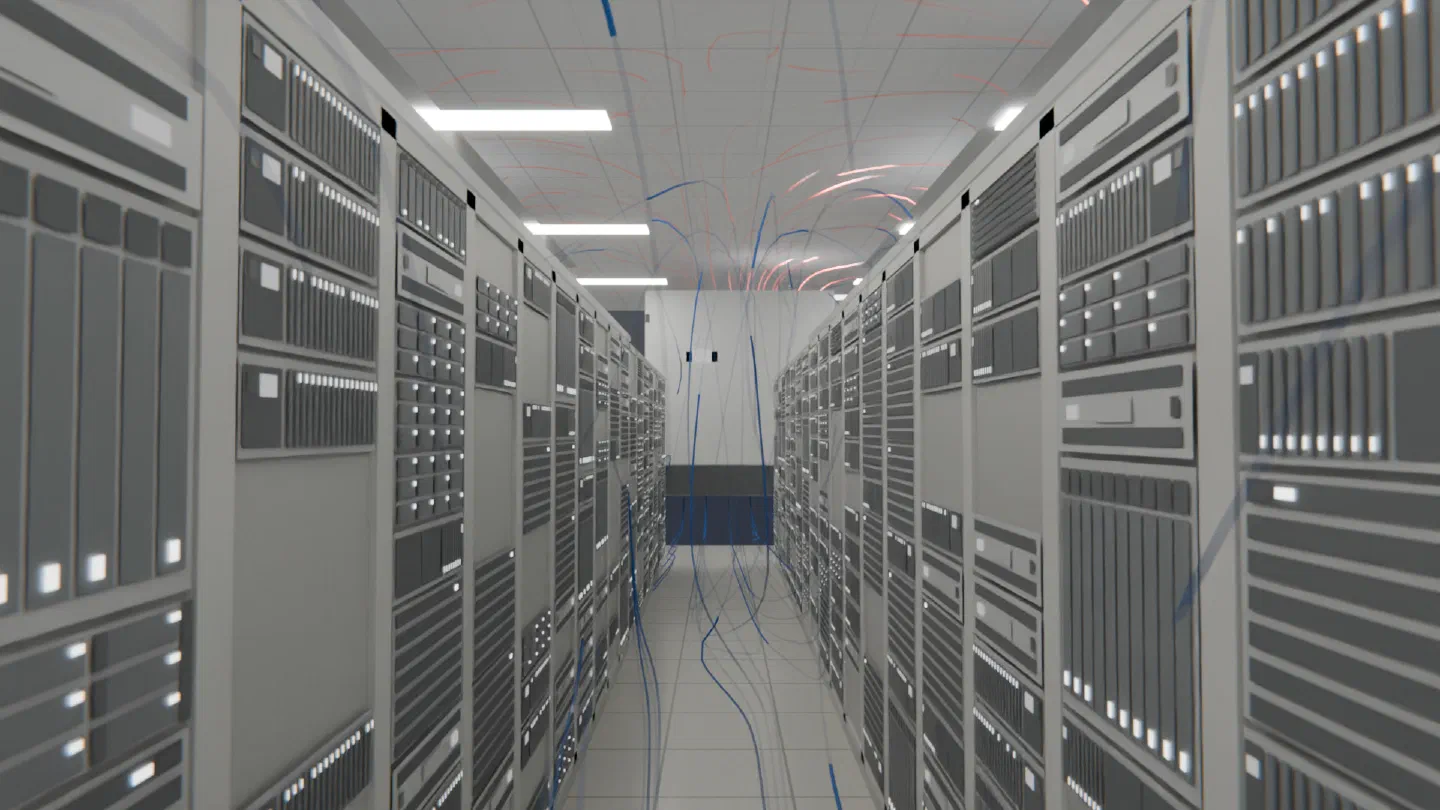
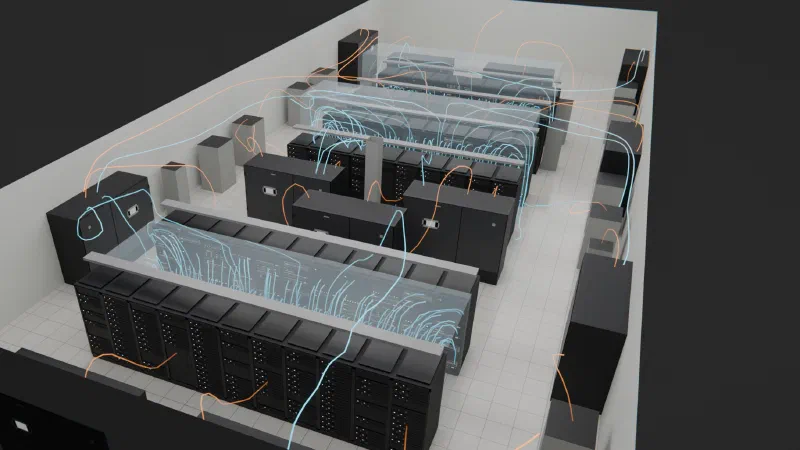
A section across a 40-rack hall, solved in CoolSim: supply from two down-flow CRACs through a raised floor, return through a ceiling plenum. Each streak is air moving at its solved speed, colored by its solved temperature.
- below 70 °F
- 70–75
- 75–80.6
- 80.6–90
- above 90 °F